
The Complete Guide to Fork Types and Their Uses
Understanding the different types of forks and their purposes transforms your dining experience from adequate to exceptional. Each fork is meticulously designed for specific foods and dining occasions, allowing you to enjoy your meal with grace and proper technique.
1. Dinner Fork: The Workhorse of Your Flatware

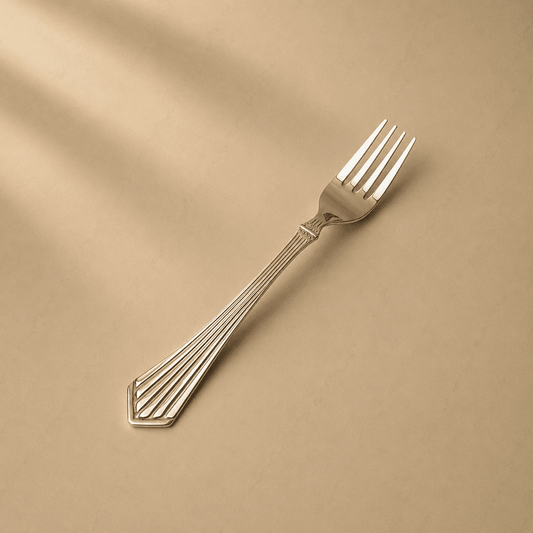
The dinner fork is the most common and versatile fork in your cutlery collection. Typically measuring between 7 and 8 inches in length, the dinner fork features four long, evenly-spaced tines of equal length. This fork was first designed in the early 19th century, around the same time that more emphasis was being placed on formal dining.
- Purpose: The dinner fork is designed for eating the main course and can handle a wide variety of foods, from tender meat to roasted vegetables. Its balanced design makes it the standard fork for most meals.
- Design Features: The four tines are evenly distributed and relatively sturdy, allowing them to cut through various food items without bending.
- Table Setting: In formal place settings, the dinner fork is positioned to the left of the plate, typically on the outer side of the salad fork.
2. Dessert Fork: Your Sweet Course Companion

The dessert fork, sometimes called a pastry fork or cake fork, is specifically designed for eating desserts from a plate. Measuring between 6 to 7 inches in length, this fork is smaller than a dinner fork and slightly broader.
- Purpose: The dessert fork is designed for eating pastries, cakes, pies, and other sweet treats without requiring a knife.
- Design Features: Many dessert forks feature three or four tines, with distinctive characteristics including a flattened, widened left tine that can cut through soft pastries or cakes without needing a knife. Some versions feature barred designs where tines are connected together with bars, particularly in pre-1920 designs. The left-side widening design allows the fork to be used like a knife to cut food when pressed down on the plate.
3. Fruit Fork: Elegance for Fresh Delicacies

The fruit fork is a delicate utensil designed specifically for eating fresh fruit courses, typically served at the beginning or end of formal meals. Measuring around 5.5 to 6.5 inches long, it features two or three short, sharp tines that allow for precise piercing of softer fruits like berries, grapes, or melon slices without crushing them.
- Key Features and Uses: The tines are finely pointed to easily penetrate fruit skins while maintaining an elegant appearance. This fork is ideal for fruit salads, compotes, or individual fruit servings in multi-course dinners. In traditional place settings, it may appear on the far left or be presented with the fruit course.
4. Shrimp Fork (or Seafood Fork): Precision for Shellfish

Also known as a shrimp fork or cocktail shrimp fork, this is a petite utensil perfect for shellfish appetizers. Typically 4 to 5 inches in length with two short, sturdy tines—one often slightly wider or hooked—it excels at extracting meat from shrimp tails, lobster claws, or crab legs.
- Key Features and Uses: The asymmetrical tine design allows diners to deftly remove shellfish from shells without mess. Commonly used at cocktail parties or as part of seafood hors d'oeuvres, it's versatile for shrimp cocktail, prawn dishes, or small shellfish servings.
5. Baby Fork: The Practical Toddler Essential

The baby fork follows a distinct design philosophy tailored to local dining habits and child development needs. Baby forks typically measure 15-16 cm (about 6 inches) in length, slightly smaller than a standard dinner spoon (around 18-20 cm) but noticeably larger than fruit forks or dessert forks (under 6 inches). This intermediate size provides toddlers with better control while transitioning from spoon-feeding to self-feeding with family-style meals common in Indian households.
- Key Features and Uses: They're ideal for soft rice preparations, dal, mashed vegetables, fruits, and early solids during baby-led weaning.
5. Spork: The Hybrid Innovation

The spork combines the best of a spoon and fork in one versatile utensil, featuring shortened spoon-like bowl with 3-4 protruding tines. Popularized in the 20th century for camping, fast food, and casual dining, it measures 5-7 inches and bridges the gap between scooping and spearing.
- Key Features and Uses: Ideal for yogurt parfaits, soups with chunky vegetables, or travel meals where space is limited. Disposable plastic versions dominate casual settings, while premium stainless steel sporks serve outdoor enthusiasts and eco-conscious diners.